
Last updated November 22, 2026
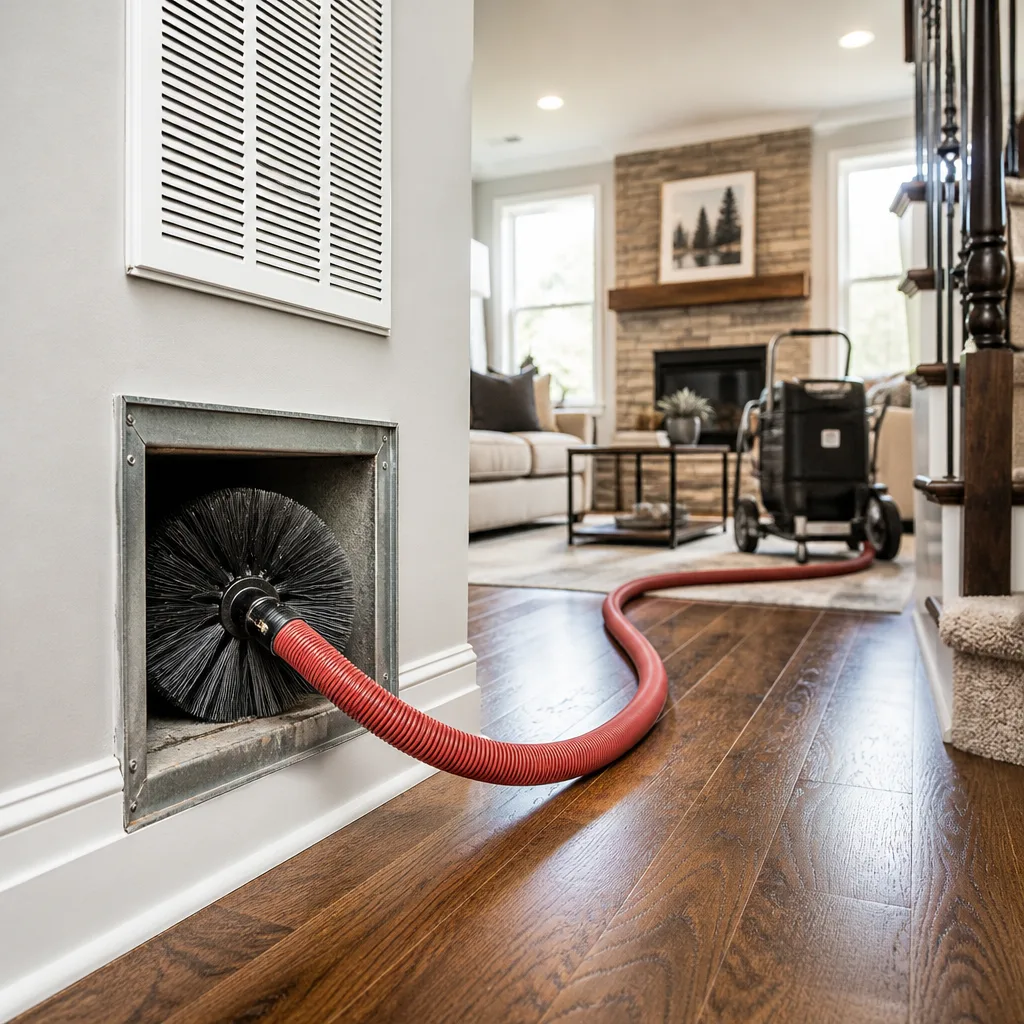 Whole-home duct cleaning
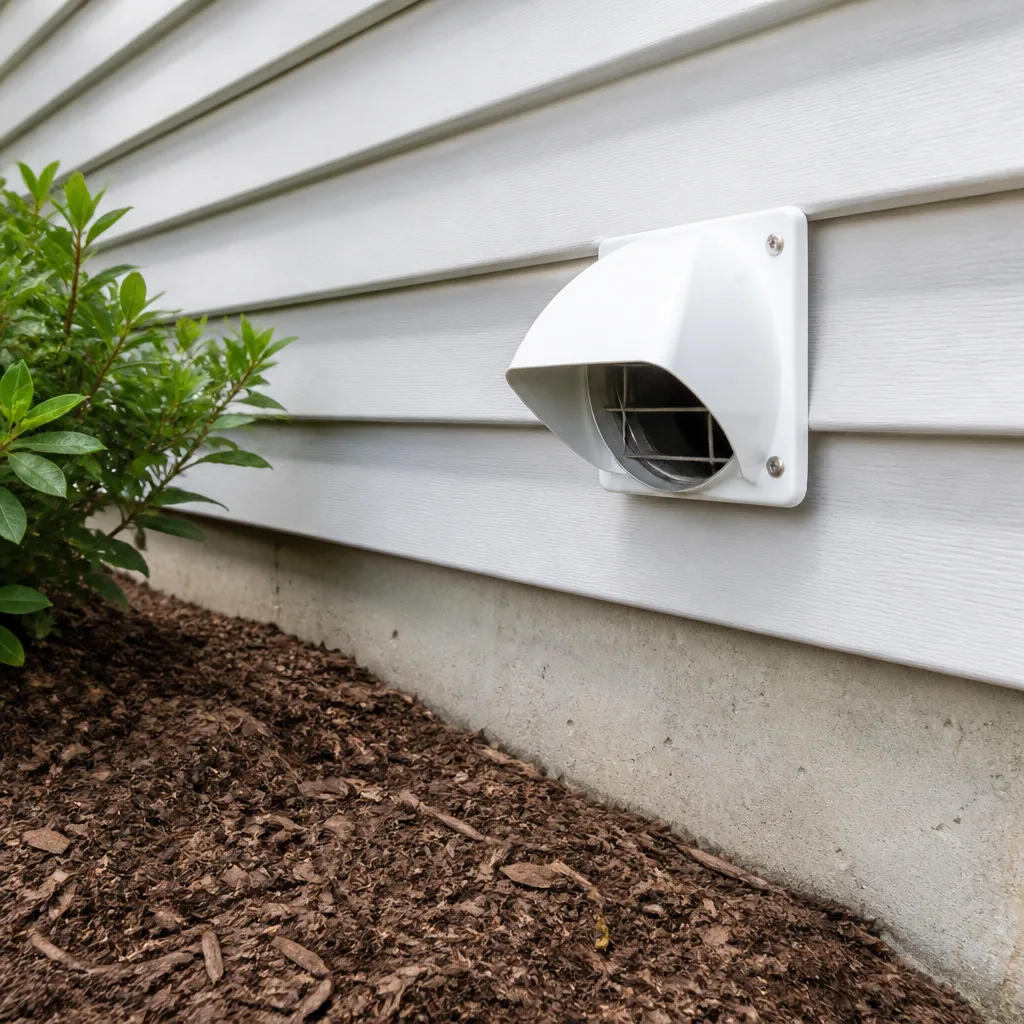 Dryer vent cleaning
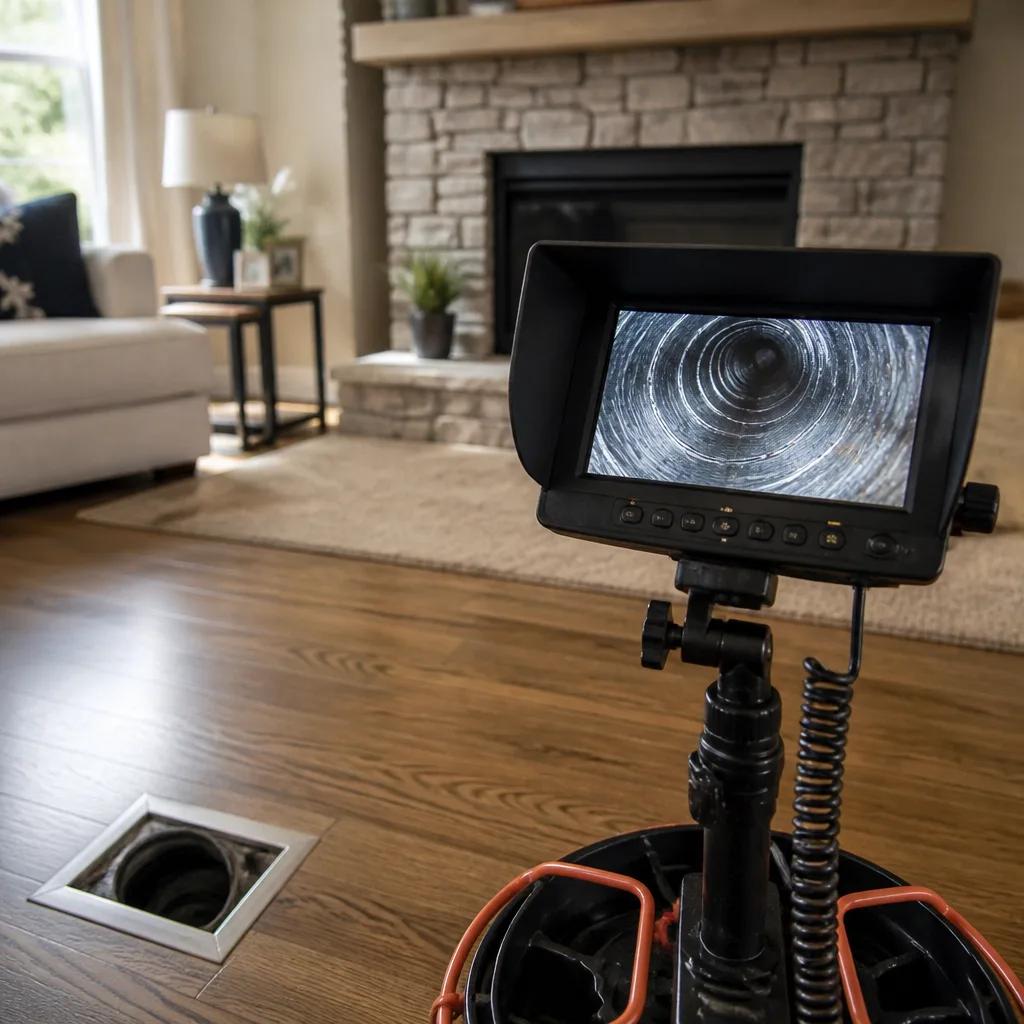 Camera inspection
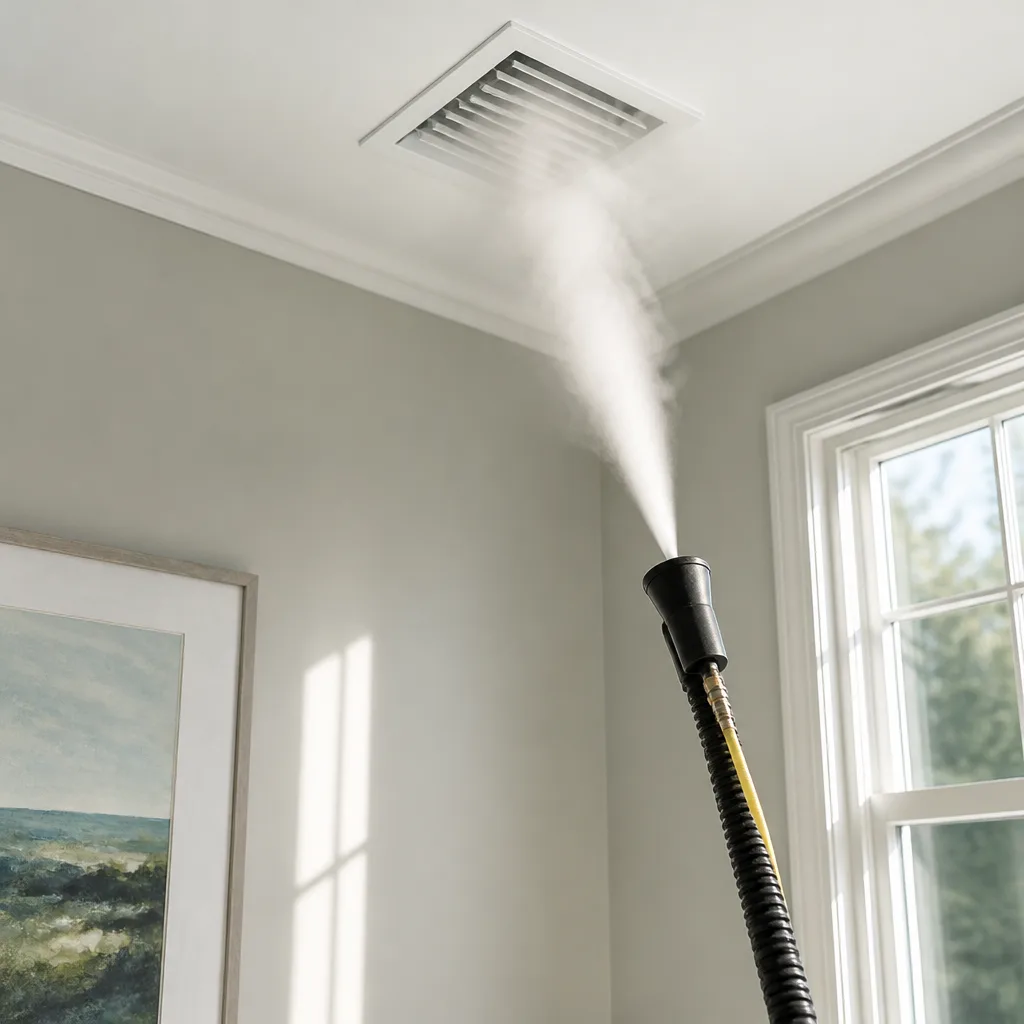 Sanitizing & deodorizing
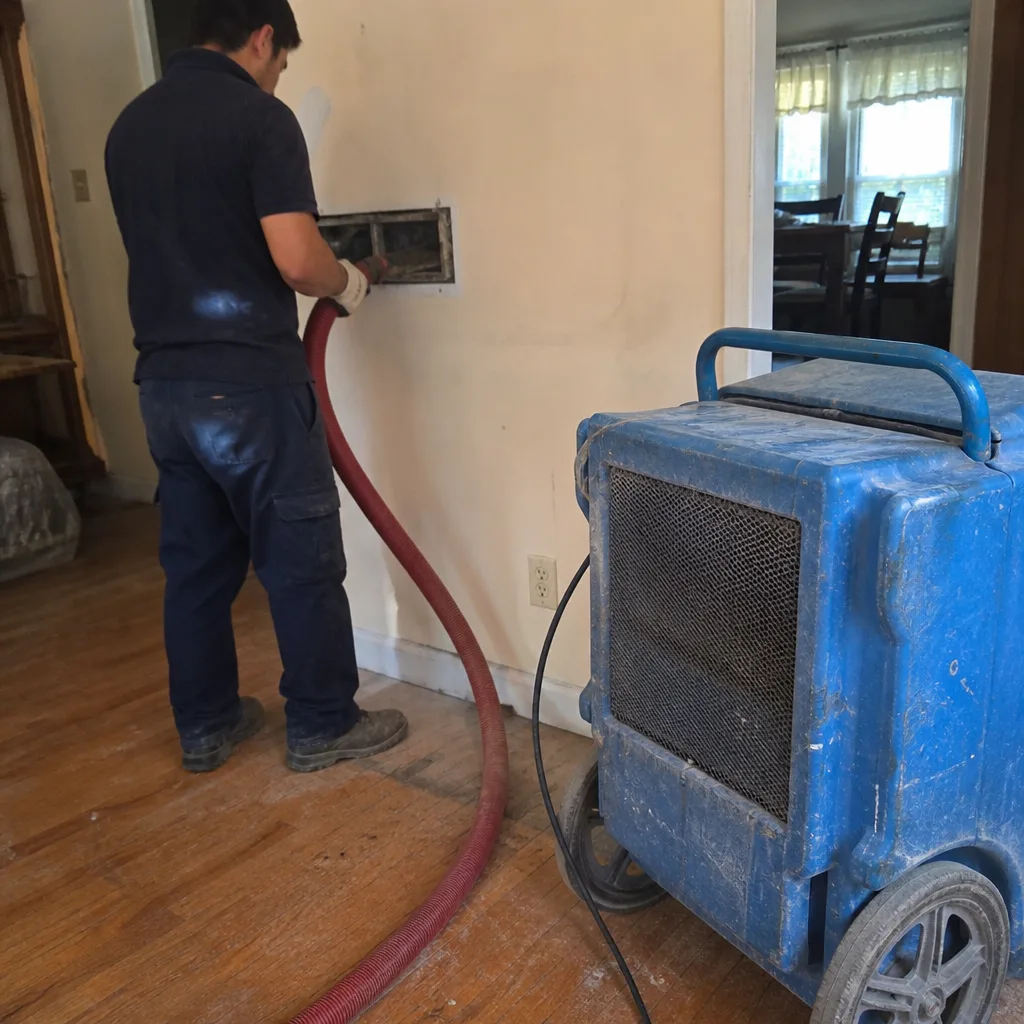
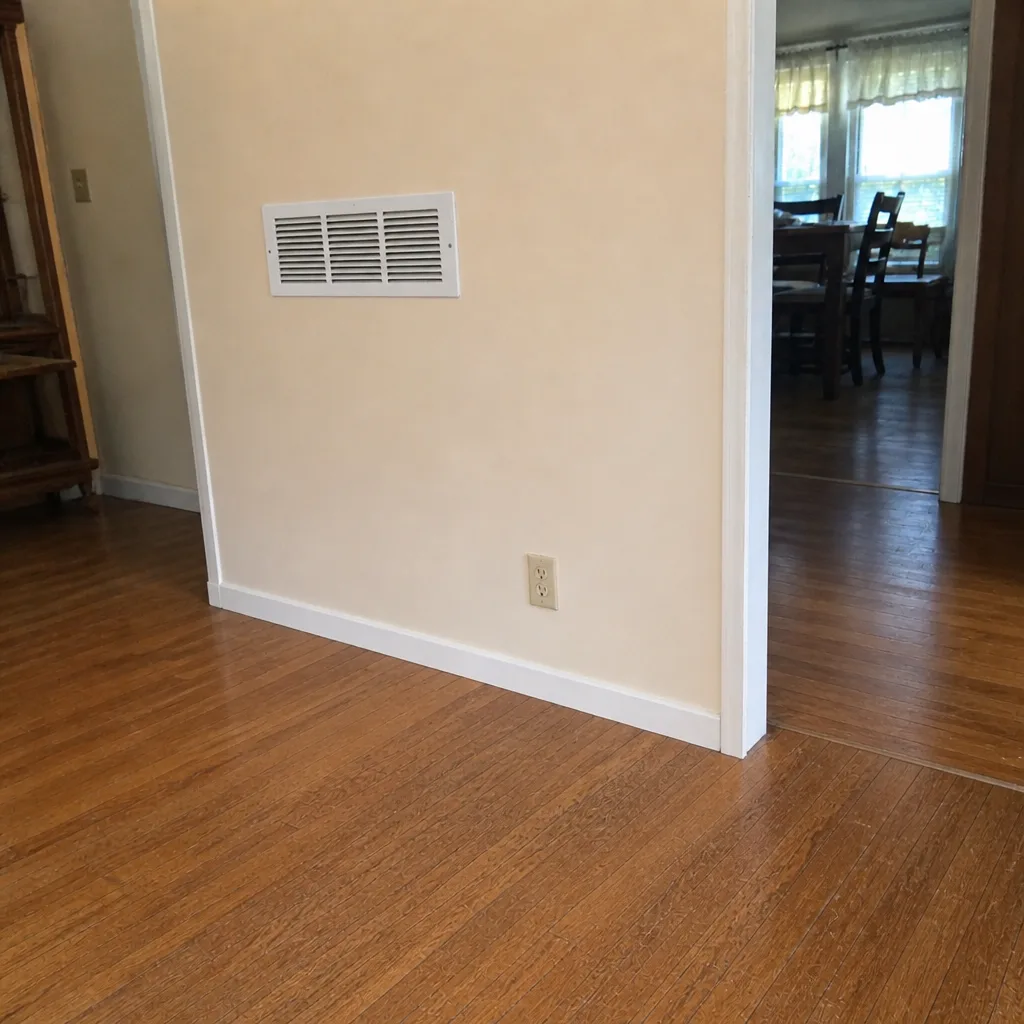
Whole-system duct and dryer vent check with before-and-after photos - you see exactly what came out of your vents
That "$99 whole-house special" is a bait ad - the real number appears once they are in your hallway, or the "clean" is a shop-vac at the register. We photograph the inside of your ducts before and after instead.
Air Duct Cleaning Warning Signs: A Canarsie Homeowner’s Reference Guide
A room that’s always colder than the rest of the house is a thermostat problem only some of the time. More often it’s a collapsed flex duct section or a disconnected supply boot that has been dumping conditioned air into a wall cavity, quietly, for longer than anyone remembers. The system still runs. The bill still gets paid. Nothing looks broken. That’s the trap with duct problems in Canarsie: the symptoms show up as ordinary household annoyances, so they get treated as ordinary household annoyances. This guide reframes those familiar complaints as diagnostic data and shows you how to describe what you’re seeing so a technician knows exactly what to look for.
Quick Answer
Air duct warning signs fall into five diagnostic categories: airflow problems (weak or uneven output at registers), dust patterns (dirty supply registers versus dusty rooms), smell profiles (musty, burning, chemical, oily), temperature imbalances between rooms, and visible damage at joints, boots and plenum connections. Each category points to a different failure mode, and matching the symptom to the right category is what tells you whether a cleaning job will solve the problem or whether the ductwork needs a camera inspection and repair first.
Styles & brands we work with
- Whole-home duct cleaning
- Dryer vent cleaning
- Camera inspection
- Sanitizing & deodorizing
Table of Contents
- Is Your House Dusty, or Is Your Duct System Leaking?
- What the Smell Coming From Your Registers Is Telling You
- The Tissue-Paper Test: Reading Weak Airflow at Each Register
- Warning Signs Specific to Canarsie Housing
- Cleaning Job or Camera Inspection? How to Know Which You Need
- The Dryer Vent Sign Most Homeowners Misread
- How to Document What You’re Seeing Before You Call
Is Your House Dusty, or Is Your Duct System Leaking?
Most people assume a dusty house means dusty ducts. That’s true often enough that it’s become the default explanation, and it’s also the reason so many duct cleanings get sold to homes that needed sealing instead. Dust in the living space comes from two very different sources, and they leave different fingerprints.
Dust from accumulated debris inside the ducts tends to collect at the supply registers themselves, streaking outward in a fan pattern, and it shows up as dark lines around the edges of the vent cover. The dust is being pushed out of a dirty duct and deposited where the air exits. If you pull a register cover and find the interior surfaces coated, that’s debris load, and a professional air duct cleaning is the right response.
Dust from duct leakage behaves differently. It shows up in the middle of rooms, on horizontal surfaces, and along the tops of door frames and baseboards rather than concentrated at the vents. That’s because a leaking return duct in a wall cavity or attic is pulling unfiltered air from inside the building envelope and feeding it into the system, bypassing the filter entirely. The furnace filter stays surprisingly clean because it’s only seeing part of the airstream. That’s the tell: a filter that should be dirty but isn’t, next to a house that won’t stay dusted.
There’s a third pattern worth naming. Dust that seems to puff out of the registers when the system first starts is usually blower-velocity related. A system with undersized or crushed return ducts runs at higher static pressure, and that turbulence stirs up whatever settled during the off cycle. It looks like a duct cleaning problem and it’s really an airflow restriction problem.
Here’s how to sort them quickly:
- Concentrated at the register faces: debris load inside the ducts. Cleaning addresses it.
- Spread across rooms, filter running cleaner than expected: likely leakage. Sealing is the fix.
- Puffs at startup, system noisy: restricted airflow, crushed return, or undersized duct.
- Worse after a heating season: normal seasonal debris accumulation, but worth checking joint integrity.
In our experience, the third pattern is the one Canarsie homeowners most often purchase a cleaning for and the one a cleaning least often solves. If the ducts are clean and the dust returns in a month, the problem was never dirt.
What the Smell Coming From Your Registers Is Telling You
Smell is the most underused diagnostic tool in residential HVAC. Every distinct odor profile corresponds to a reasonably narrow set of causes, and knowing which one you’re dealing with tells a technician where to look first. Four profiles come up again and again.
Musty
A damp, earthy smell means moisture is present somewhere in the system. In Canarsie’s housing stock, which includes a lot of flat-roof structures, the moisture source is frequently the roof-to-plenum relationship. Water gets past a flat roof, tracks down framing, and finds the return plenum because that’s where the negative pressure is. The ductwork itself may be structurally sound; the moisture is coming from outside it. Cleaning alone won’t fix a musty smell. You need to find the intrusion point first, dry the system, and then treat it with a sanitizing step that actually addresses microbial growth. That’s the reasoning behind using Abatement Technologies equipment on the air-quality side rather than a simple spray treatment.
Burning
A hot, acrid smell when the heat runs is the one to treat seriously. It can mean the blower belt is slipping, or it can mean debris has collected on the heat exchanger and is cooking off. Either way it’s a heating-side issue, and you should shut the system down and have it inspected rather than run it to see if the smell clears. Gas-fired equipment deserves caution. Do not open panels and start poking around the heat exchanger yourself; let a trained technician diagnose it.
Chemical or plastic
A sharp, synthetic odor, particularly in a home that recently had ductwork replaced or liner installed, is usually off-gassing from new materials. It typically fades over weeks. If it persists or worsens, the liner may be degrading or was installed with an incompatible adhesive, and the affected section needs to come out.
Oily or hot-rubber
This points at the blower itself: a slipping belt, an overheating motor, or a bearing on its way out. It’s mechanical, not biological, and cleaning the ducts won’t touch it. The blower assembly is part of what HVAC cleaning covers, which is one reason we treat the air handler as part of the system rather than a separate job.
When you call, describe the smell in plain terms and say when it appears: on startup, only during heating, only during cooling, all the time. That single sentence narrows the diagnosis more than anything else you can tell a technician over the phone.
The Tissue-Paper Test: Reading Weak Airflow at Each Register
You can measure relative airflow with a square of tissue paper and no tools at all. It won’t give you a number, but it will tell you which registers are performing and which aren’t, and that pattern is genuinely diagnostic. Here’s the process.
- Run the system on fan only with all registers open and the filter installed correctly.
- Hold a single ply of tissue an inch from each supply register and let it hang. It should be pulled taut and flutter steadily.
- Note the pattern. Strong at some, weak at others, or weak everywhere – each pattern means something different.
- Repeat at the return grilles. A return should pull the tissue firmly against the grille. Weak return suction is a major finding.
- Write down the pattern and the room names. This record is what you bring to the phone call.
What the pattern means
- Weak at one or two registers, strong everywhere else: a branch-level obstruction, a crushed flex run, or a disconnected boot behind that wall. Most likely a repair issue, not a cleaning issue.
- Weak at every register on one side of the house: a trunk-level problem. A partially collapsed trunk line or a damper stuck closed.
- Weak everywhere, filter dirty: start with the filter. Always.
- Weak everywhere, filter clean, system loud: blower or static-pressure problem. The system is working harder than it should, and the blower and coil need a professional look.
- Strong supply, weak return: a leaking return duct pulling air from a wall cavity instead of from the living space. This is the pattern that most often explains a house that’s cold in some rooms and stuffy in others.
None of these patterns require guessing once you’ve written them down. That’s the point of the exercise: it turns a vague complaint into a description a technician can act on before ever arriving at the door.
Warning Signs Specific to Canarsie Housing
Duct problems in Canarsie have a particular flavor, shaped by the housing types here. Much of the neighborhood is built out with flat-roof homes, and a lot of the ductwork runs through attic crawl spaces and enclosed chases where it isn’t visible from the living space. Those two facts combine into a couple of failure modes you won’t read about in a generic guide.
Flat-roof moisture reaching the return plenum
A return plenum sits under negative pressure, and negative pressure pulls air – and moisture – toward it. When a flat roof develops a slow leak, the water doesn’t always show up as a ceiling stain. Sometimes it tracks along framing and gets drawn into the return before it ever becomes visible in the living space. The first sign is often a musty smell that’s worst near the return grille, or a return filter that stays damp to the touch. If you notice either, check the ceiling on the floor above the air handler after a heavy rain. Water intrusion into the return plenum is one of the most common reasons a Canarsie duct cleaning turns into a repair and sanitizing job instead.
Corrosion on exposed galvanized ductwork
Ductwork running through an attic crawl space is exposed to whatever humidity that space sees, and Canarsie’s summers are humid enough to matter. Exposed galvanized metal that has been through enough heating and cooling seasons will develop surface rust at the seams and fittings. Rust at a seam is a future leak: the joint opens up, unfiltered attic air gets drawn in, and you’re back to the dusty-house pattern. This is one reason we treat Duct Repair & Sealing as part of the same visit as cleaning rather than a second contractor’s job. When we find weak seams during a cleaning, we can address them in the same visit with the same crew, start to finish.
Enclosed chases hiding disconnected boots
Older homes in Canarsie often route supply branches through enclosed chases between rooms. A boot that separates from the floor or wall register inside a chase is invisible from the living space and nearly silent. The only sign is the one from the tissue test: one register weak while its neighbors are fine. If that pattern appears, don’t accept a cleaning quote as the answer. The boot needs to be found and reconnected first, or the cleaning will be spent on a system that’s still leaking.
One more thing worth saying plainly: Canarsie’s housing stock predates modern duct sealing standards, and it’s common to find joints sealed with duct tape that has long since failed. Tape adhesive dries out and lets go. What’s left behind looks like a sealed joint and behaves like an open one.
Cleaning Job or Camera Inspection? How to Know Which You Need
The single most useful decision you’ll make is whether your symptom set calls for a cleaning or a scope inspection first. Cleaning a system with a structural problem wastes money and can make matters worse by disturbing debris in a compromised duct. Here’s how to sort the two.
Signs a cleaning should solve the problem
- Registers are uniformly dusty and the home has never had the ducts cleaned.
- Airflow is even throughout the house but feels light.
- The system has recently been through renovation work with dust in the air.
- There’s a musty smell but no moisture present and no visible water staining anywhere.
- Dryer lint is visible around the vent termination (handled separately, but a related clue).
Signs a camera inspection comes first
- One register weak while neighbors are strong.
- A return that won’t hold tissue paper against the grille.
- Any sign of moisture in the ductwork or at the plenum.
- A home that’s been through a roof leak.
- Dust returning within weeks of a previous cleaning.
- A system that’s been noisy or short-cycling.
A camera scope through a register or a plenum access lets a technician see the inside of the trunk and branches before committing to a plan. That’s the difference between a guess and a diagnosis. For a straightforward cleaning, our technicians run Rotobrush and Nikro extraction equipment, the same platforms commercial contractors specify, which matters most when the debris load is heavy and the duct runs are long. For a repair-threshold situation, the scope comes first and the written estimate follows the inspection.
We can’t speak for every operator in the area, but we can tell you what the process should look like: scope first where the symptom calls for it, written estimate before any work, one flat price for the job agreed in advance. If a contractor quotes a cleaning without asking you a single diagnostic question, that’s worth noticing.
The Dryer Vent Sign Most Homeowners Misread
A dryer that takes two cycles to dry a load is usually read as a failing appliance. It’s more often a restricted vent line. Lint accumulates on the interior walls of the exhaust duct, and as the line narrows, the dryer has to run longer to move the same moisture out. Heat builds up inside the duct along with the lint, and that’s the part worth taking seriously: a restricted dryer vent is a fire risk, not just an efficiency annoyance.
The signs are consistent. Clothes take longer than they used to. The dryer body feels hotter than it should. The laundry room stays humid. The exterior vent flap barely moves or doesn’t open fully when the dryer is running. A layer of lint around the termination point outdoors. Lint behind the dryer at the wall connection.
Dryer vent cleaning is a separate service from duct cleaning, with its own equipment and its own length constraints. Many duct-only operators skip it entirely because it’s a different job. In our view it belongs in the same relationship: if a technician is already in the home for dryer vent cleaning and duct work, both get done at one visit instead of two.
If you’ve never had the vent line cleaned and you can’t remember the last time, run the tissue test at the exterior termination with the dryer on high. If the flap doesn’t swing open, the line is restricted. Schedule it.
How to Document What You’re Seeing Before You Call
The quality of the phone call determines the quality of the first visit. A homeowner who can describe a symptom pattern precisely gets a faster, cleaner diagnosis than one who says “the air feels wrong.” You don’t need to know HVAC to gather the right observations. You just need to write them down.
- Run the tissue test at every register and note strong or weak for each. Include returns.
- Note the rooms that never feel right. “Always cold” and “always stuffy” are different findings.
- Photograph the register faces where dust streaks are visible. Get close.
- Write down the smell and when it appears. On startup? Only when heating? All the time?
- Check the filter and note its condition. Also note the date it was last changed.
- Note any recent roof or water work. Flat-roof repairs and duct problems show up together often enough to be worth asking about.
- Look at the exterior vent terminations for the dryer and any other exhaust.
Bring that list to the call and you’ll get a much more useful conversation. A technician can already narrow the likely causes before arriving and bring the right equipment. That’s especially true for homes with Honeywell or Aprilaire filtration or zoning components installed, where an unfamiliar configuration needs a careful approach so nothing gets disturbed during the visit. If the system has been modified and the original documentation is lost, knowing that in advance helps.
If you’re not sure what you’re looking at, that’s fine. Call Air Duct Cleaning Canarsie and describe what you’ve got. We answer 24/7. Fast dispatch from 7am to 7pm, Sunday through Friday. Same-day scheduling is often possible for straightforward assessments, and the estimate is free.
Common Mistakes to Avoid
- Booking a cleaning to solve a leak. If the filter stays clean and the dust keeps coming back, you’re dealing with leakage, not debris. Cleaning a leaking system leaves the leak in place and the dust returns within weeks. Have the system scoped before committing to a cleaning in that scenario.
- Assuming the dryer is failing. A dryer that needs two cycles to dry a load is usually fighting a restricted vent line. Replacing the appliance is the expensive wrong answer. Run the tissue test at the exterior flap first.
- Ignoring a burning smell from a register. Call it in and shut the heating side down. Debris on a heat exchanger is a safety finding, not something to run until it clears. Gas and combustion equipment always warrants a trained technician.
- Buying on price alone. A low quote from a crew using repurposed shop vacuums and a per-vent rate is the industry’s bait-and-switch pattern. Whole-system pricing with the tools to match the job costs what it costs, and the written estimate should be the number you pay.
- Skipping the closed chases and attic runs. Enclosed chases and attic crawl spaces in Canarsie homes hide disconnected boots and rusted seams. Any plan that doesn’t include checking those runs will miss the actual problem.
- Sealing over wet ductwork. If moisture is present, seal it first. Sealing a wet joint traps water in the system, and that moisture grows something worse than what you started with. Drying before sealing, not after.
- Trusting failed old duct tape. Duct tape from a previous era looks sealed and isn’t. If a joint is taped and hasn’t been checked in years, it’s a candidate for resealing with proper mastic or foil tape during a repair visit.
See the difference
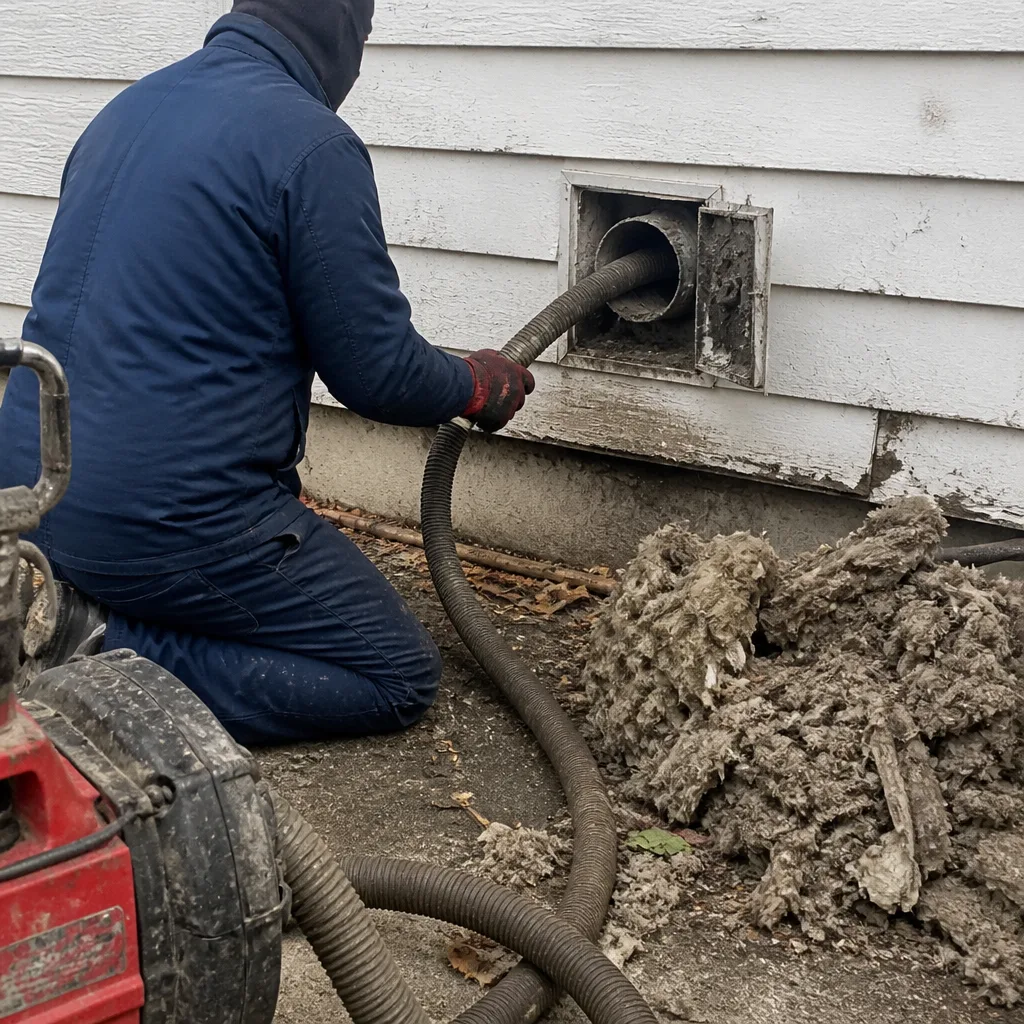 Before
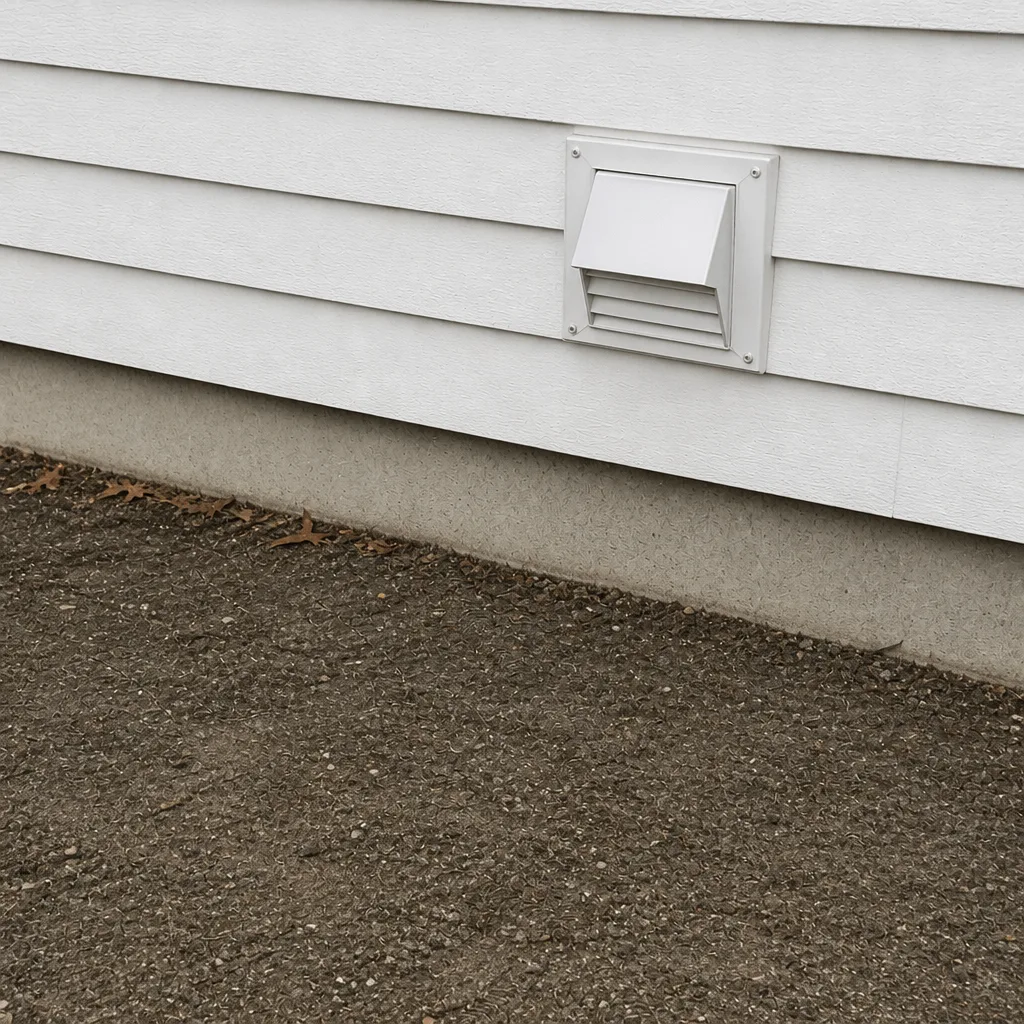 After
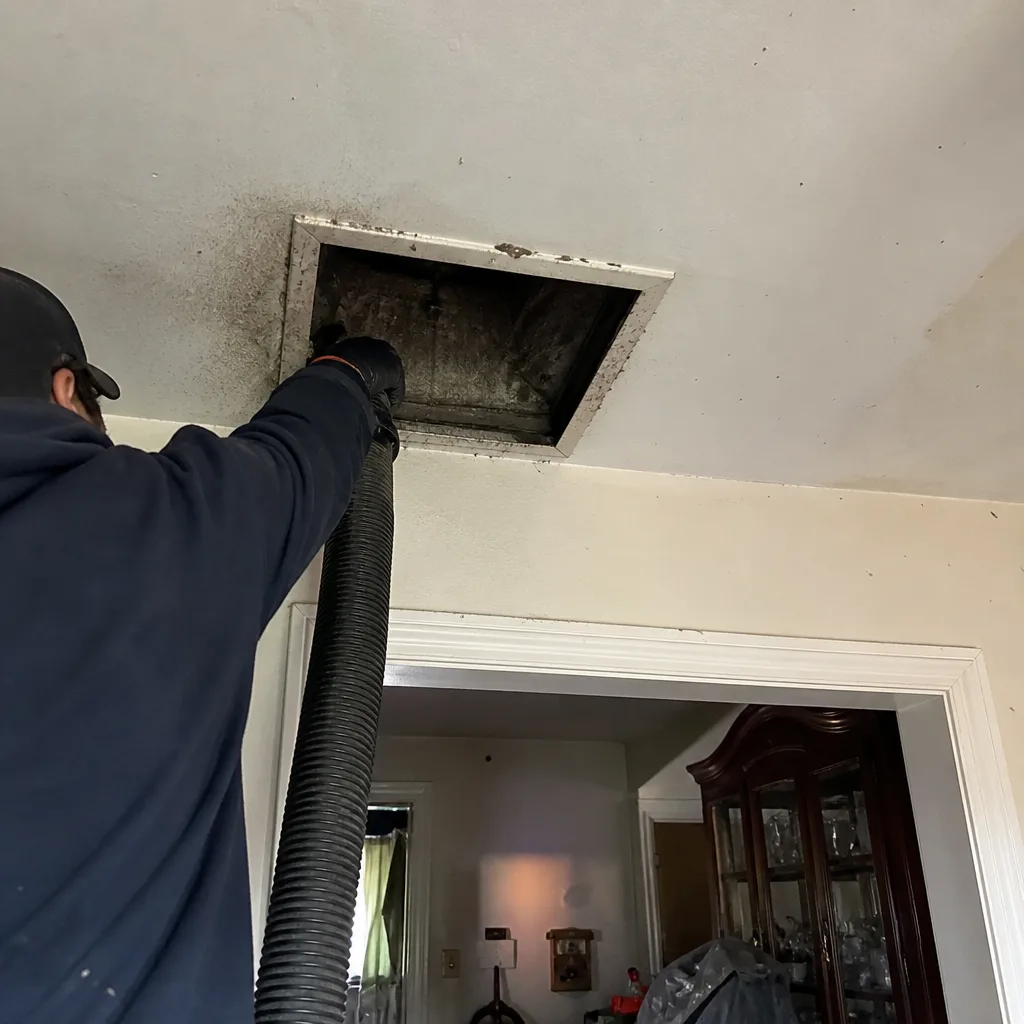 Before
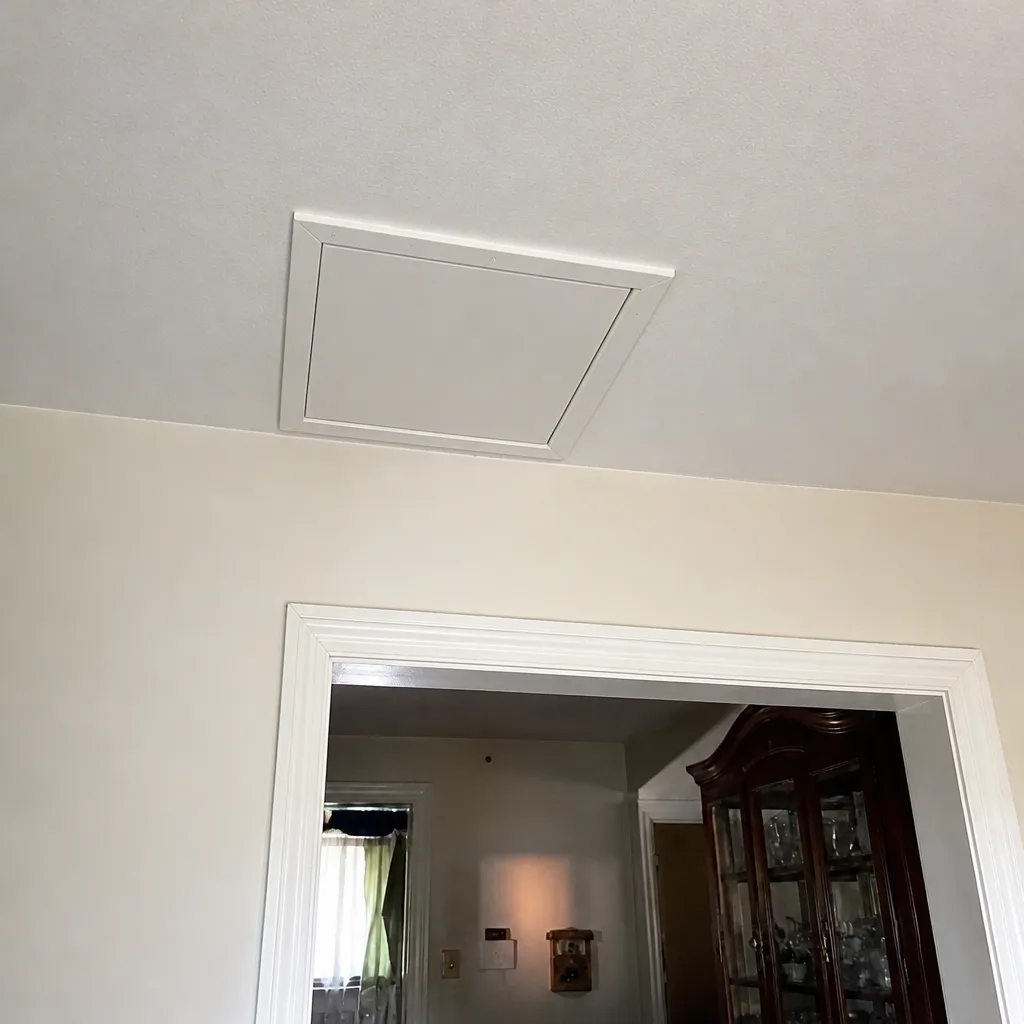 After
 Before
 After
When to Call a Professional
Call a professional when you can’t tell from the symptoms whether the ducts are dirty or leaking, when a burned or chemical smell appears from any register, when moisture is present anywhere in the system, when the tissue test shows a weak register next to strong ones, or when the same dust problem has come back after a cleaning. Call when you’re planning renovation work and want a system checked before the dust starts flying. Call when the dryer has joined the list. And call when the attic crawl space or enclosed chases are involved, because those aren’t spaces you should be investigating yourself.
Air Duct Cleaning Canarsie offers free estimates in Canarsie. Call (888) 774-8092. We answer 24/7. Fast dispatch from 7am to 7pm, Sunday through Friday. Our technicians have up to 8 years of experience, and we bring the equipment for the whole air pathway, from ducts and HVAC to dryer vent and sanitizing, under one roof.
Frequently Asked Questions
You need cleaning when the problem is debris load: dusty register faces, a system that’s been through renovation, or ducts never cleaned in a home with sustained use. You need repair or sealing instead when the problem is a leak: dust that returns quickly after cleaning, a filter that stays clean while rooms stay dusty, or one register weak while its neighbors are strong. Run the tissue test at every register and note the pattern, then call for a free estimate.
An always-cold room is most often a collapsed flex duct run, a disconnected supply boot, or a partially closed damper feeding that branch, not a thermostat problem. The fix depends on which one it is, and the tissue test at the register in that room is the quickest way to narrow it down. Call (888) 774-8092 for a free estimate; a scope inspection will confirm the cause.
A musty smell from a return vent usually means moisture has entered the system somewhere, often via a flat-roof leak tracking down to the return plenum, where negative pressure draws the water in. Cleaning alone won’t fix it, and sealing over a wet joint traps the moisture. The intrusion needs to be located and the system dried and sanitized. Call us to talk through the assessment.
Yes, when the ducts are leaking or restricted. Airflow restrictions force the blower to work harder, and duct leakage sends conditioned air into wall cavities and attics instead of into the rooms. Both effects show up as longer runtimes and higher bills. A tissue test and a visual check of the register faces tell you which pattern you’re dealing with; a proper assessment confirms it.
Yes. A dryer that still works but takes longer to dry a load is usually showing you a restricted vent line. Lint builds up on the interior walls of the duct, narrowing it and raising heat inside the line. That’s a fire risk as well as a performance issue. Run the tissue test at the exterior flap with the dryer on high; if the flap doesn’t swing open, schedule dryer vent cleaning.
Ask for before-and-after photos of your own ducts, not sample photos, and confirm that the price is one flat figure set by a written estimate before work begins, not a per-vent rate. A technician using professional-grade equipment can show you what came out and what the ducts look like after. With Rotobrush and Nikro equipment, that documentation is part of the job standard. Call (888) 774-8092 for a free estimate.
The Bottom Line
The dust, the smell, the cold room, the dryer that’s losing its edge: none of these are random complaints. Each one points to a specific failure mode, and matching the symptom to the mode is what separates a cleaning that solves the problem from one that doesn’t. If the dust concentrates at the register faces, clean. If it spreads through rooms and the filter stays clean, look for a leak. If one register is weak and its neighbors aren’t, scope the branch first. If the smell is musty, find the water. If it’s burning or oily, shut the system down and call a technician. In Canarsie, add the flat-roof moisture question and the attic crawl-space check to every list. Our technicians have up to 8 years of experience and handle cleaning, HVAC, sealing, dryer vent, and sanitizing with the same professional-grade equipment throughout.
When you suspect your duct system is the source of a symptom you can’t quite name, call (888) 774-8092 for a free estimate. Air Duct Cleaning Canarsie brings the equipment for the whole air pathway, a single flat price per system agreed before work starts, and before-and-after photos of your own ducts. We answer 24/7. Fast dispatch from 7am to 7pm, Sunday through Friday.
Written by the team at Air Duct Cleaning Canarsie.